Starting Strong: A Guide to UK Legal Requirements for Expat Entrepreneurs

So, you’re an expat with big dreams of launching your own venture in the UK? Awesome! But before you dive headfirst into the exciting world of British business, it’s super important to get a handle on the legal stuff. This guide, Starting Strong: A Guide to UK Legal Requirements for Expat Entrepreneurs, is here to help you navigate the essential steps, making your journey as smooth as a cuppa on a rainy day. Let’s get cracking!
Picking Your Business Structure
The first big decision is how you’ll set up your business. This choice affects everything from your personal liability to your tax obligations.





Sole Trader
- What it is: You and your business are legally the same entity. It’s the simplest setup.
- Pros: Easy to set up, minimal paperwork, full control.
- Cons: Unlimited liability (your personal assets are at risk), can be harder to raise investment.
Limited Company (Ltd)
- What it is: A legal entity separate from its owners (shareholders) and managers (directors).
- Pros: Limited liability (personal assets are protected), enhanced credibility, easier to raise capital, potential tax advantages.
- Cons: More administrative burden, requires registration with Companies House.
Partnership
- What it is: Two or more individuals or companies agree to share in the profits or losses of a business.
- Pros: Shared responsibility and expertise, simpler than a limited company.
- Cons: Joint and several liability (unless a Limited Liability Partnership), potential for disputes.
Visa & Immigration: Your Right to Work
Before you even think about signing leases or hiring staff, you need to ensure you have the legal right to live and work in the UK. For many expat entrepreneurs, this is the foundational step.
The UK offers specific visa routes for those looking to start a business. The most prominent currently is the Innovator Founder Visa. This visa requires endorsement from an approved body, a viable business plan, and sufficient funds. It’s crucial to understand the latest immigration rules and apply for the correct visa category.

Always consider consulting an immigration solicitor to ensure you meet all requirements and avoid any bumps in the road. Getting your visa sorted correctly is a massive part of Starting Strong: A Guide to UK Legal Requirements for Expat Entrepreneurs.
Understanding UK Taxation
Ah, taxes! Not the most thrilling topic, but absolutely essential. The UK tax system can seem complex, but breaking it down makes it manageable.
Registering with HMRC
No matter your business structure, you’ll need to register with HM Revenue & Customs (HMRC). Sole traders register for Self Assessment, while limited companies register for Corporation Tax.
Corporation Tax
If you run a limited company, your profits will be subject to Corporation Tax. The rates can change, so it’s good to keep an eye on official guidance.
Income Tax & National Insurance
- Sole Traders: You’ll pay Income Tax and National Insurance on your business profits through Self Assessment.
- Limited Company Directors: You’ll pay Income Tax and National Insurance on your salary and dividends.
Value Added Tax (VAT)
If your business’s VAT-taxable turnover goes above a certain threshold (currently £90,000 for 2024-2025), you must register for VAT. You can also register voluntarily if your turnover is below the threshold, which can sometimes be beneficial.
Essential Registrations and Compliance
Beyond visas and taxes, there are a few other boxes to tick to ensure your business is fully compliant.
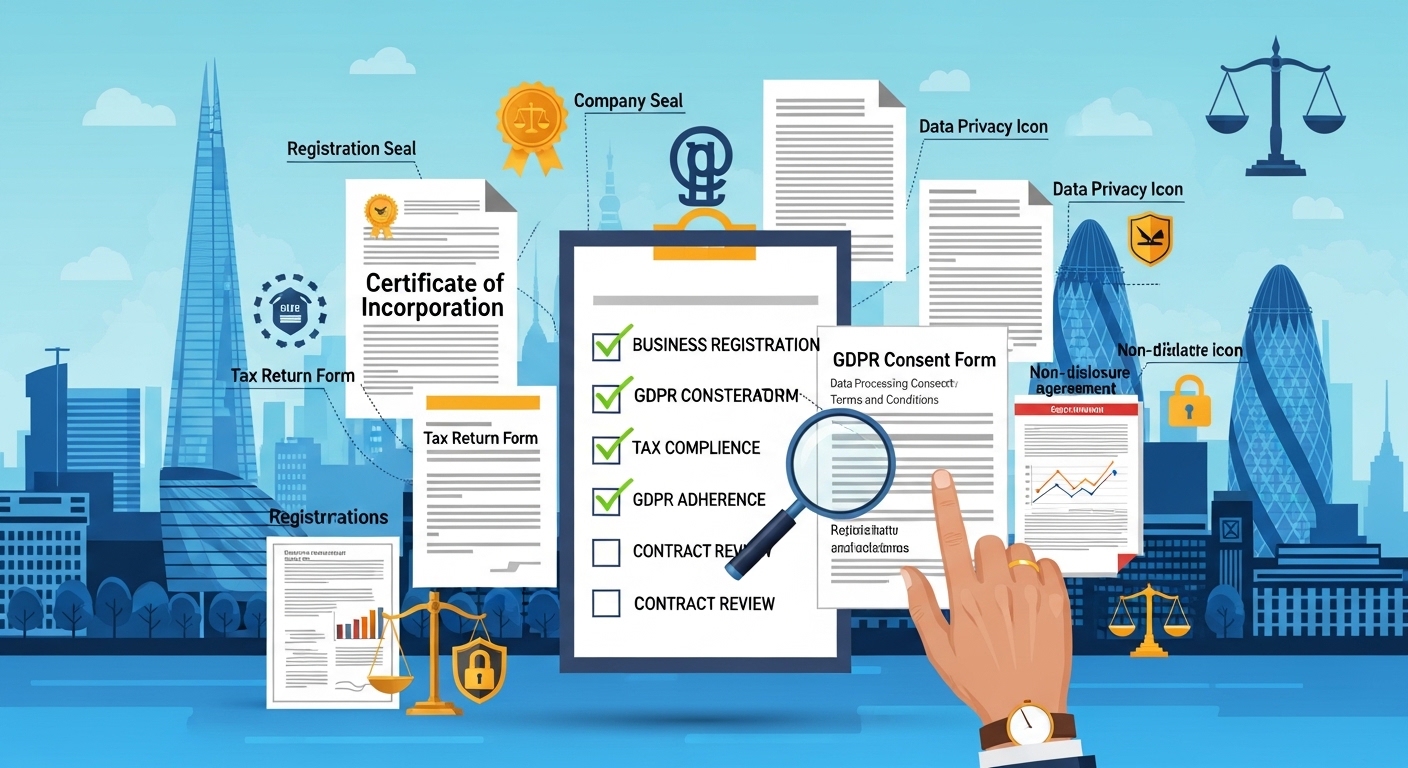
- Companies House Registration: If you’ve chosen a limited company, you’ll need to register your company with Companies House. This involves choosing a unique company name, providing details of directors and shareholders, and submitting your company’s Articles of Association.
- Data Protection (GDPR): If your business handles personal data (and most do!), you must comply with the UK General Data Protection Regulation (UK GDPR). This usually means registering with the Information Commissioner’s Office (ICO).
- Business Insurance: While not always a legal requirement, certain types of business insurance (like employers’ liability insurance if you hire staff) are compulsory. Others, like public liability or professional indemnity, are highly recommended to protect your venture.
Banking & Financial Management
Opening a dedicated business bank account is non-negotiable, even for sole traders. It keeps your personal and business finances separate, making accounting and tax reporting much simpler. Research different banks and their offerings for business accounts to find one that suits your needs.
Getting Professional Help
Navigating the ins and outs of UK legal requirements for expat entrepreneurs can be a lot. Don’t be shy about seeking professional advice! Accountants can help with tax planning and financial reporting, while solicitors can guide you through contracts, intellectual property, and compliance.
Ready to Launch?
Setting up a business in a new country is an exciting adventure, and by understanding these core legal requirements, you’re Starting Strong: A Guide to UK Legal Requirements for Expat Entrepreneurs is designed to give you that firm foundation. Take it step by step, ask for help when you need it, and you’ll be well on your way to entrepreneurial success in the UK! Good luck!